Wax Compound Composition: What Lava Lamp Wax Is Made Of
The Base Material: Paraffin Wax and Its Grades
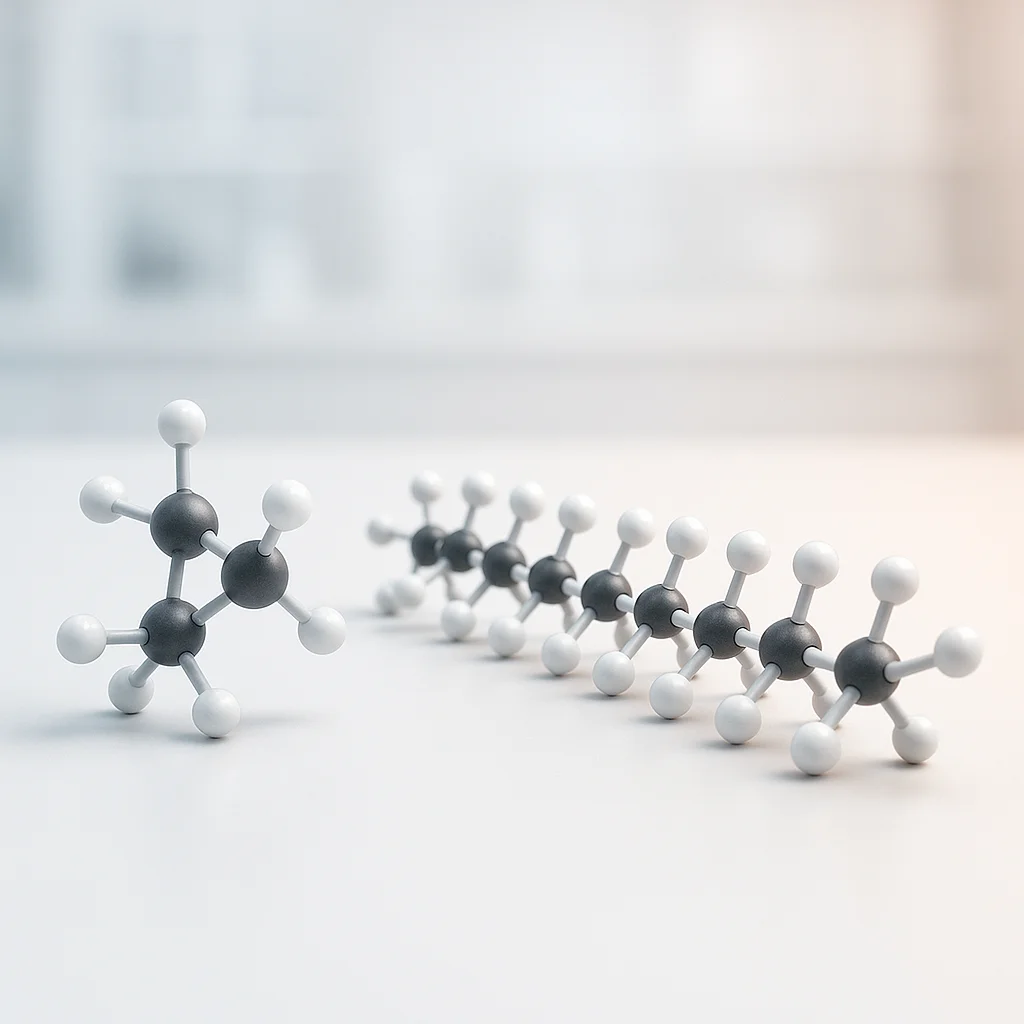
Lava lamp wax is built on a paraffin wax foundation, but the grade of that paraffin determines almost everything about how the final blend performs. Paraffin wax is a mixture of straight-chain alkanes (primarily C~18~ to C~36~ hydrocarbons), and its melting point rises predictably with average chain length. Manufacturers select paraffin grades with melting points in the range of approximately 54 °C to 66 °C for most standard lamp formats — close enough to the operating temperature that the wax softens and flows without requiring excessive heat that would degrade either the fluid or the coil assembly.
The distinction between a fully refined paraffin and a semi-refined or scale wax matters considerably here. Fully refined paraffins are whiter, more consistent in chain-length distribution, and carry fewer residual aromatic compounds. Semi-refined grades introduce a broader hydrocarbon spread, which softens the melting transition — producing a more gradual solid-to-liquid change rather than a sharp phase flip. This accounts for the characteristic slow detachment of blobs from the base: rather than melting all at once, the wax passes through a softening window of several degrees, during which surface tension and partial buoyancy interact to produce motion.
Density Modifiers and Additives
Paraffin wax alone melts at a density of roughly 0.77–0.79 g/cm³, which is too buoyant in the water-based fluid column to produce the calibrated rise-and-fall cycle. The working principle requires solid wax to sink and liquid wax to rise, which means the solid density must exceed the fluid density and the liquid density must fall just below it — a window typically spanning no more than 0.01–0.02 g/cm³. Achieving this balance requires the addition of density-modifying compounds.
Carbon tetrachloride was used historically for this purpose but has been excluded from commercial production globally due to its ozone-depleting properties. Contemporary wax blends use denser hydrocarbon compounds — often chlorinated paraffins in tightly regulated formulations, or higher-density mineral additives — to bring the wax’s solid-state density up into the range of approximately 1.00–1.05 g/cm³. The precise target depends on the fluid composition, which is itself adjusted with water-soluble salts or surfactants. Both variables are tuned in tandem, not independently.
Colorants are suspended or dissolved within the wax matrix rather than the fluid. Oil-soluble dyes are used because they remain stably associated with the hydrophobic wax phase and do not migrate into the surrounding aqueous column over time. Translucency is partly a function of dye concentration and partly of the paraffin grade’s natural crystal structure when solidified.
How Composition Affects Operating Behaviour
The ratio of base paraffin to density modifier does more than set the average density — it shapes the rheological behaviour of the melt. A wax blend that is heavy on modifier relative to paraffin tends to produce a stiffer, less viscous melt, which generates smaller, more fragmented blobs. A paraffin-dominant blend melts to a more viscous fluid, producing larger, slower-moving masses. Viscosity also interacts with surface tension at the wax–fluid interface, which is why even minor reformulation of the blend — such as a change in paraffin supplier or grade — can shift motion character noticeably without any change in measured density.
Thermal cycling degrades wax blends incrementally. Repeated melting and re-solidification causes the paraffin crystal structure to coarsen, and volatile low-molecular-weight fractions evaporate slowly over years of use. Both effects shift the density calibration upward over time, which is the underlying mechanism behind the wax-sinking failure mode discussed in detail on the Common Wax Failure Modes page.
The composition of lava lamp wax is, ultimately, a constrained optimisation across density, viscosity, melting point, and longevity. Understanding those variables individually — and how they interact — is the foundation for interpreting both normal motion and failure. The Density Calibration and Thermal Behaviour pages develop each of those dimensions further.