Cures and Corrections for Mathmos Wax Failure
Matching the Correction to the Failure Mode
Effective correction of wax failure in Mathmos units depends on correctly identifying the underlying cause before intervening. The common wax failure modes — clouding, permanent pooling, surface skinning, and density drift — each arise from distinct physical or chemical mechanisms, and a correction applied to the wrong diagnosis will either have no effect or compound the problem. The guidance here is therefore organised by failure type rather than by procedure, so that the mechanism drives the method.
Addressing Density Drift
Density drift — the condition in which wax either sits permanently on the base or floats unbroken at the surface — is the most tractable of all failure modes because it can be corrected without replacing the wax. The principle is straightforward: the wax and fluid must share a density difference narrow enough that thermal expansion tips the balance across equilibrium, yet wide enough that the wax does not oscillate too rapidly or too slowly. Density calibration covers this balance in full; the practical implication here is that small additions to the fluid column can nudge the system back into range.
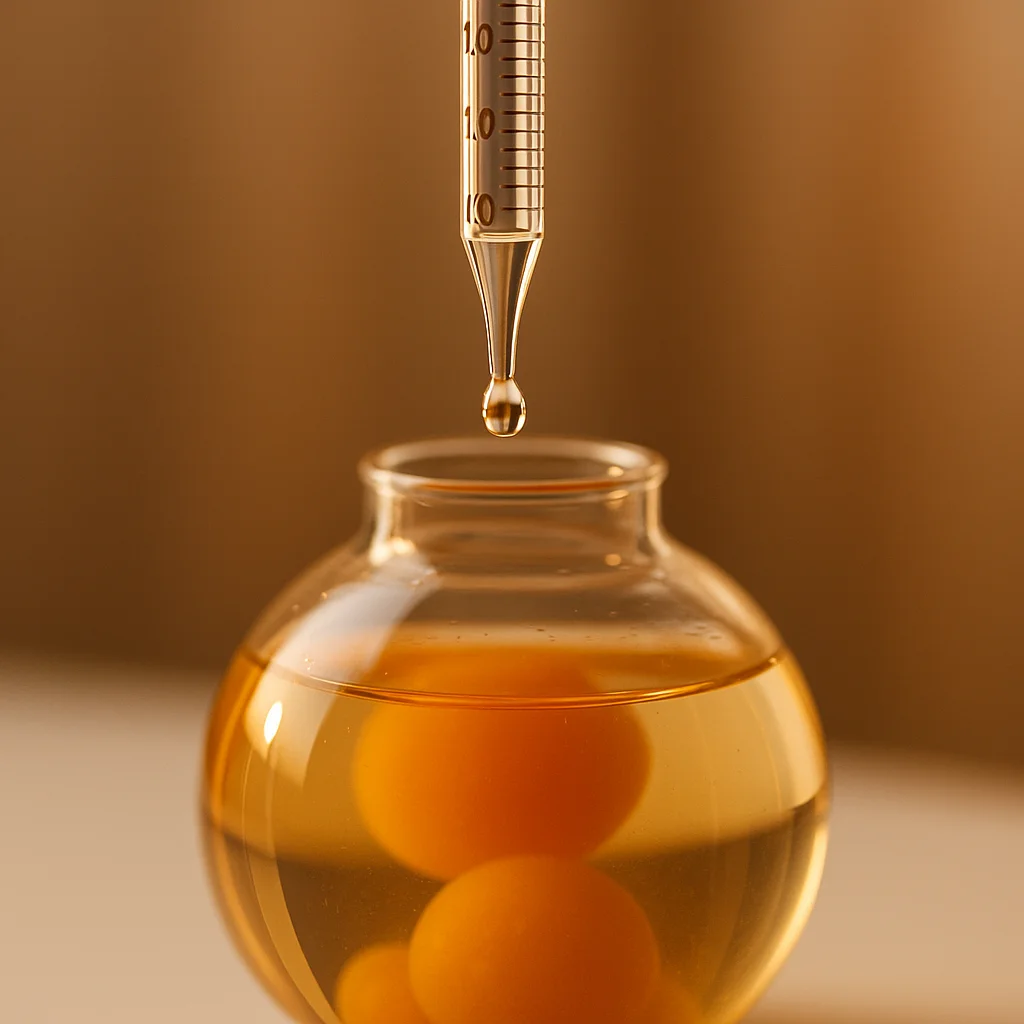
For wax that rests permanently on the base (cold density too high relative to fluid), adding a small quantity of distilled water to the fluid column reduces the average fluid density fractionally. Additions should be made in increments no larger than 1–2 ml per 250 ml of total fluid volume, with a full thermal cycle between each adjustment. For wax that floats permanently (warm density still too high relative to fluid), a saturated saline or magnesium sulphate solution added in similarly small increments raises the fluid density. The reference tables for fluid densities at operating temperature are available in the Reference Tables section.
It is worth noting that Mathmos units use a two-part solvent base in the wax compound — typically a blend of paraffin waxes and a denser co-component — meaning the wax density itself can shift over long service if the co-component partitions into the fluid phase. This accounts for the gradual rather than sudden onset of density drift in older units. Fluid adjustment corrects the symptom; it does not reverse compound separation, which is a wax-side problem.
Correcting Surface Skinning and Wax Coherence Failures
Surface skinning — where the wax forms a persistent film at the fluid–air interface rather than cycling cleanly — results from oxidative degradation or surfactant depletion at the wax surface. The surfactant layer that governs interfacial tension between wax and fluid is the mechanism responsible for clean blob separation and rejoining; when this layer is compromised, the wax behaves as though it is hydrophobic in an exaggerated sense, resisting re-immersion.
A controlled temperature cycle can help in mild cases: running the lamp at its rated wattage until the wax fully mobilises, then reducing to a lower wattage briefly to encourage partial cooling at the column mid-point, can break up a skin that has not yet become structurally stable. This works because the thermal gradient across the blob, rather than a uniform surface temperature, promotes internal flow and disrupts the forming film.
Where skinning is persistent or accompanied by opacity, the surfactant system has been depleted beyond self-correction. In Mathmos units, this typically signals that a full fluid replacement is warranted rather than incremental adjustment.
What Cannot Be Reversed Without Replacement
Permanent clouding of the fluid — resulting from wax emulsification — and severe compound separation are not correctable through operational adjustment. Both require draining and replacing the fluid column, and in the case of compound separation, replacing the wax as well. The wax compound composition page explains why re-blending separated wax reliably fails: the density-modifying co-component does not re-incorporate into the paraffin matrix once it has partitioned out.
For readers working through a specific failure, the annotated diagrams provide visual identification guides, and the FAQ addresses common uncertainties about when replacement is the more practical path.